
How to effectively seal challenging flange chemical applications?
Restructured PTFE filled with hollow glass microspheres is a unique material that combines excellent chemical resistance with high compressibility. Unlike traditional skived or molded PTFE, the restructured form minimizes creep while allowing the gasket to conform more effectively to flange surfaces, especially under lower bolt loads. These characteristics make TEADIT Tealon® TF1570 a highly effective choice for demanding chemical sealing applications. To ensure optimal sealing performance, follow key steps for evaluating, selecting and implementing the right gasket material.
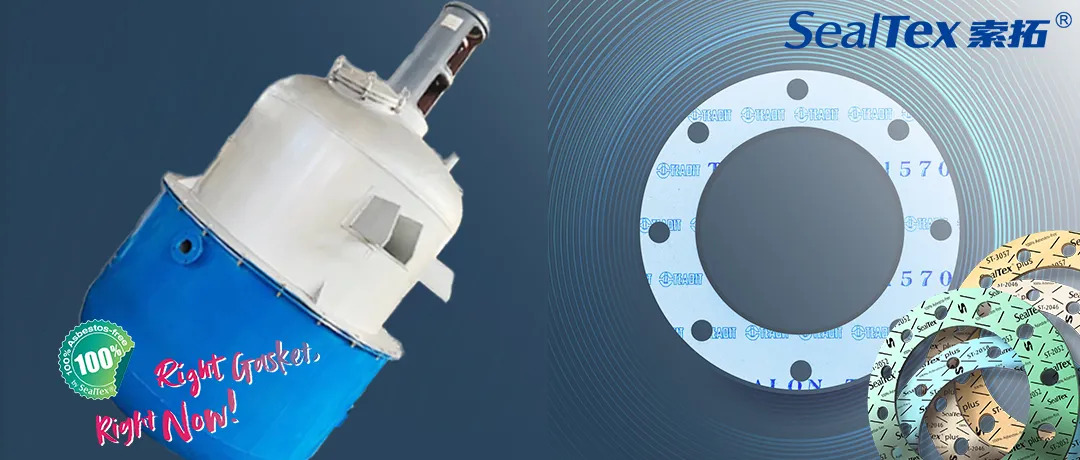
Step 1: Assess the demands of the sealing environment: Operators and maintenance personnel should assess the application’s operating conditions. It is important to identify all process chemicals, especially acids, alkalis and oxidizers. Consider prolonged or extreme exposure. Temperature and pressure should also be noted, and normal and peak values recorded. Determine if high compressibility or low bolt load sealing is needed. It is also important to note if flange construction is glasslined, plastic or otherwise sensitive to high loads. Finally, assess the surface conditions, such as unevenness, warping or coating flaws that may hinder gasket performance.
Step 2: Understand the material’s functional advantages: Evaluate flange and operational parameters to determine whether skived or molded PTFE gaskets fail to conform or seal effectively. If issues are found, consider how the gasket’s structure and fillers impact performance. Restructured PTFE matrix has excellent chemical resistance with reduced creep or cold flow and is compatible with fillers. Glass microsphere filler is designed for high compressibility allowing the gasket to conform to imperfect surfaces while maintaining seal integrity under lower bolt loads. Its mechanical flexibility is suited for equipment that cannot tolerate high seating stress. Restructured PTFE is engineered for sealing environments that challenge conventional materials.
Step 3: Select the optimal gasket material: Once the chemical application is fully assessed, select the gasket material most suitable to the process media’s demands. For applications involving fragile or glass-lined flanges, or where over-torquing poses a risk, Tealon TF1570 has proven highly effective. Its restructured PTFE base provides superior chemical resistance; the glass microspheres enhance compressibility and adaptability; and its mechanical integrity supports reliable sealing with low bolt loads.
Step 4: Calculate bolt load and torque: Gaskets with PTFE and hollow glass microspheres must be installed using controlled bolt loading. Torque calculations should be based on the material’s compressibility to avoid overloading, especially with thin or coated flanges. Use a recommended torquing procedure, such as ASME PCC-1, to ensure even load distribution. Always consult with your engineering department for specific torque values and detailed assembly instructions.
Step 5: Follow best practices for installation and monitor performance: Proper installation is critical to gasket performance. Clean all flange surfaces thoroughly and inspect surfaces for damage or irregularities that could compromise sealing. Carefully align the gasket without introducing stress or distortion. Tighten bolts using ASME PCC-1 guidelines for uniform load distribution. In elevated temperature applications, consider retorquing after a complete thermal cycle, if required. During commissioning, monitor for early signs of leakage and document performance data. To extend gasket life, avoid misalignment and uneven bolt loading.
Selecting gasket material engineered to adapt to flange irregularities, aggressive chemical exposure and variable loads allows engineers to address persistent sealing challenges more effectively. Tealon TF1570 offers a science-based material solution for difficult-to-seal applications. By following these recommendations, operators can ensure proper material selection, installation and long-term gasket performance in even the most challenging chemical environments.
